A minimally invasive catheter-based therapy that widens narrowed, stiffened heart valves without open-heart surgery, offering immediate relief from breathlessness.
The Balloon Valvotomy therapy guarantees that the patient stays aloof from major symptoms involving valve diseases. Heart valves, specifically the mitral valve, can become severely thickened and fused due to rheumatic heart disease (Mitral Stenosis). This restricts blood flow from the lungs into the left ventricle, causing severe breathlessness, pulmonary edema, and heart palpitations.
Under the skilled hands of Dr. Mukul Bhargava, Percutaneous Balloon Mitral Valvotomy (BMV / PTV) is performed in the modern Cath Lab. A specialized balloon catheter (such as the Inoue balloon) is guided across the heart and inflated precisely inside the valve orifice. The balloon gently splits the fused valve leaflets, instantly doubling the valve area and restoring normal hemodynamic flow—all without cutting the chest or stopping the heart.
Open mitral valve replacement requires lifelong blood thinners (Warfarin/Coumadin), a large chest scar, heart-lung bypass machine, and weeks of recovery. Balloon valvotomy preserves your own natural biological heart valve, requires no lifelong anticoagulation, and has an exceptionally swift recovery time.
No. Balloon valvotomy is performed under local anesthesia and mild conscious sedation. You remain awake and comfortable throughout.
For patients with pliable valve leaflets, the relief often lasts 10 to 15+ years, postponing or entirely avoiding the need for metallic valve replacement.
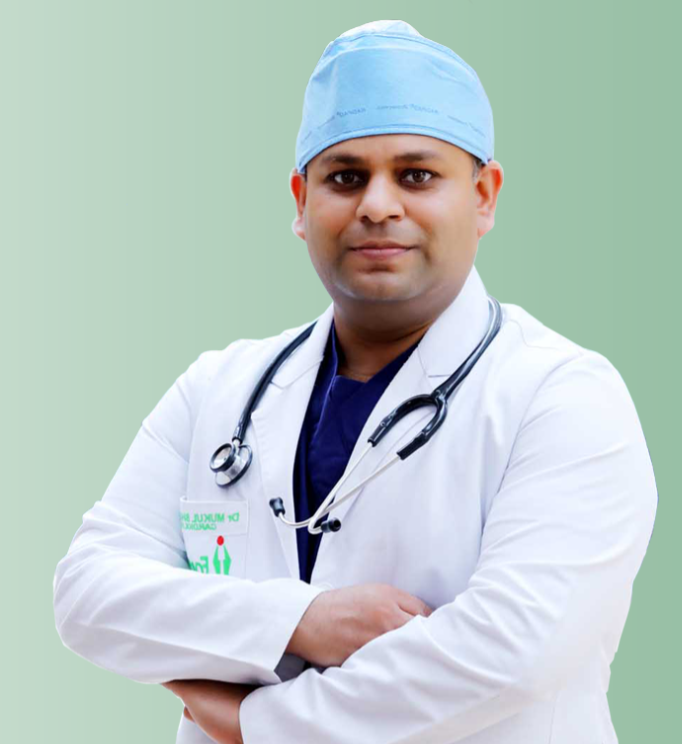
DM Cardiology (Gold Medallist)
Max Hospital, Gurugram
Extensive procedural expertise in structural heart interventions including BMV and TAVR at Max Hospital Gurugram.
For acute breathlessness or chest pain, call Dr. Bhargava's emergency desk.
+91-9560105356