Widening blocked heart arteries using advanced drug-eluting stents (DES) and real-time intravascular ultrasound (IVUS) guidance to restore healthy blood flow without open surgery.
Coronary angioplasty helps to widen blocked or narrowed coronary arteries. The term angioplasty itself means using a miniature balloon catheter to stretch open the diseased blood vessel and implanting an expandable metallic mesh tube called a Drug-Eluting Stent (DES) to keep the artery permanently patent.
With over 16 years of expertise, Dr. Mukul Bhargava specializes in high-precision angioplasty using advanced imaging techniques including IVUS (Intravascular Ultrasound) and OCT (Optical Coherence Tomography). These tools allow sub-millimeter stent sizing and guarantee that stents are completely opposed against vessel walls, reducing re-blockage rates to below 2%.
Trans-radial puncture enables swift mobilization within hours
US-FDA certified drug-coated stents to prevent scar tissue
Emergency Cath Lab readiness for acute heart attacks
Modern drug-eluting stents last for life. Once deployed, endothelial cells grow over the stent mesh within a few months, making it a natural part of the arterial wall.
For elective stenting done via the wrist, patients are monitored overnight and discharged comfortably within 24 to 36 hours.
Yes. Dr. Mukul Bhargava provides comprehensive second opinions. You can bring your angiogram CD or upload reports for an unbiased review.
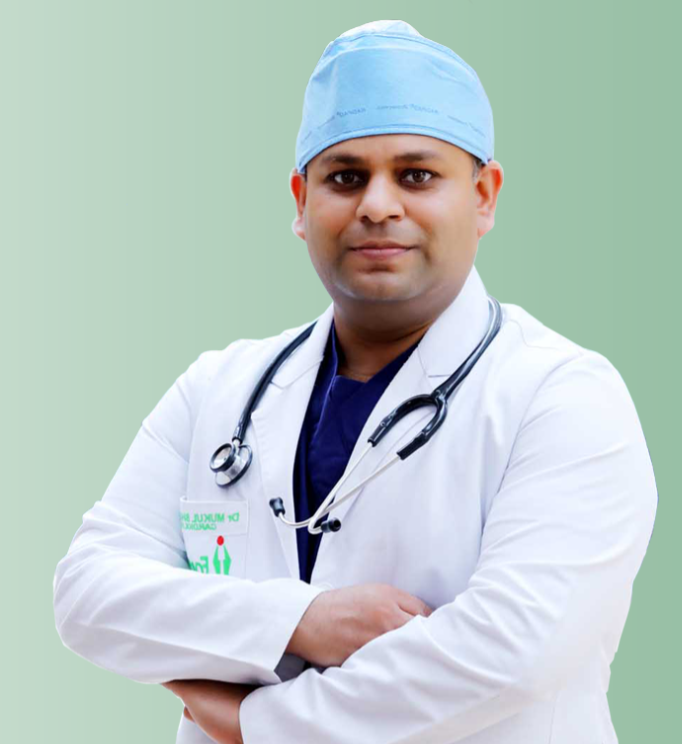
DM Cardiology (Gold Medallist)
Max Hospital, Gurugram
Renowned for complex bifurcations, left main stenting, rotablation atherectomy, and primary emergency angioplasty.
Immediate primary PCI for heart attacks saves heart muscle. Call our emergency hotline.
+91-9560105356