
A painless, high-precision imaging procedure that identifies the exact location and severity of coronary artery narrowing using advanced digital cine-fluoroscopy.
Coronary Angiography requires a special dye (also known as contrast material) and X-Ray imaging to check the blood flow through coronary arteries. It is the international gold standard for diagnosing Coronary Artery Disease (CAD), angina, and acute heart attacks.
Under the expertise of Dr. Mukul Bhargava at Max Hospital Gurugram, angiographies are routinely performed via the Trans-Radial (wrist) Route. This eliminates the discomfort of lying flat for hours (as required with groin femoral punctures), enables immediate walking post-procedure, and minimizes bleeding complications.
The patient remains awake throughout. A mild local anesthetic is injected at the right wrist so you feel no discomfort.
A micro-catheter is threaded gently into the coronary arteries. Safe radiopaque dye is injected while high-resolution X-ray cameras capture dynamic flow movies.
Dr. Bhargava immediately reviews the video findings with the patient and family. If an artery is severely occluded, angioplasty or medical therapy can be decided transparently.
A pressure band (TR-band) is applied to the wrist. Patients can sit up, eat a light snack, and return home within 3 to 4 hours.
No. Local anesthesia numbs the wrist puncture. Most patients only experience a brief sensation of mild warmth during dye injection.
The actual catheterization typically takes only 15 to 20 minutes inside the Cath Lab.
With the wrist radial route, most patients resume light office work and routine daily activities the very next morning.
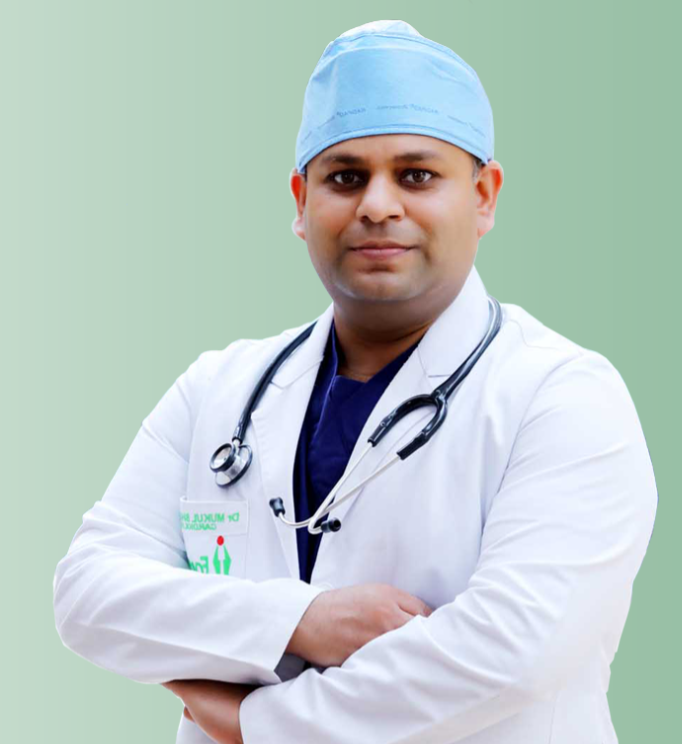
DM Cardiology (Gold Medallist)
Max Hospital, Gurugram
Over 16 years of clinical leadership in interventional cardiology and more than 10,000 successful coronary angiograms and complex PCIs.
Call immediately for emergency Cath Lab admission and primary angioplasty.
+91-9560105356