
A comprehensive invasive procedure measuring exact chamber pressures, oxygen saturation levels, valve gradients, and congenital shunts.
Cardiac catheterization is an invasive imaging and pressure-monitoring procedure that provides direct, objective hemodynamic data inside the heart. While echocardiograms estimate pressures non-invasively, cardiac catheterization physically measures exact intra-cardiac pressures down to the millimeter of mercury (mmHg).
Conducted in the state-of-the-art Cath Lab at Max Hospital Gurugram by Dr. Mukul Bhargava, this procedure includes both Right Heart Catheterization (RHC) and Left Heart Catheterization (LHC). It is indispensable for diagnosing pulmonary hypertension, evaluating complex heart failure, assessing congenital heart defects, and confirming valve stenosis severity prior to surgery.
A Swan-Ganz balloon-tipped catheter is introduced through a vein (neck or arm) into the right atrium, right ventricle, and pulmonary artery.
A catheter is guided retrograde through an artery (wrist or groin) across the aortic valve into the left ventricle.
Yes. In experienced hands with modern fluoroscopy and transducer equipment, complication rates are under 0.1%. Patients are continuously monitored by senior cardiologists.
Most patients rest in our observation recovery ward for 3 to 4 hours post-procedure and are discharged home the same afternoon or following morning.
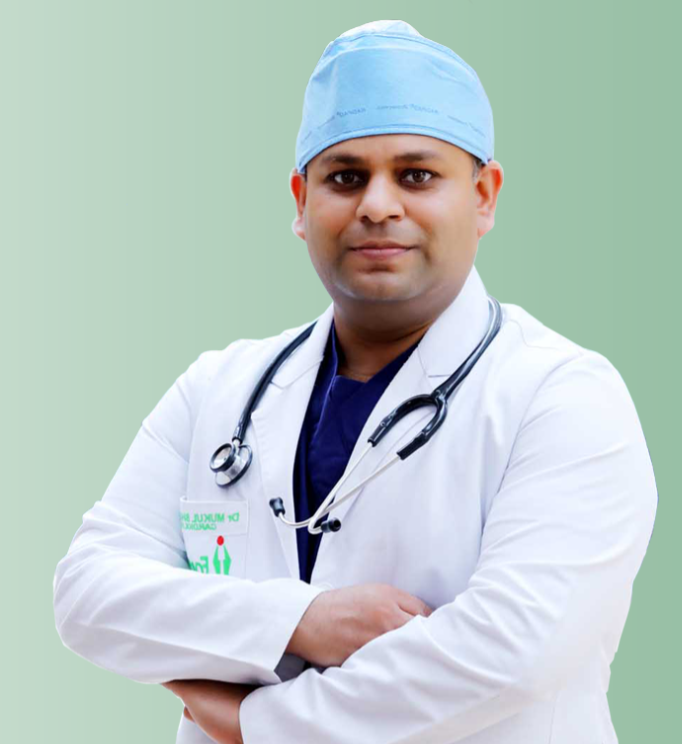
DM Cardiology (Gold Medallist)
Max Hospital, Gurugram
Fellowship training from G.B. Pant Hospital New Delhi with vast experience in invasive cardiac hemodynamics.
Immediate admission and catheterization available round the clock at Max Hospital.
+91-9560105356