
Safeguarding your heart against dangerously slow heart rates, fainting episodes, and heart block with state-of-the-art MRI-conditional pacemakers.
The implantation of a pacemaker device keeps track of the constant beating of the heart. The secret behind pacemaker technology lies in its sophisticated pulse generator and microscopic sensory leads that monitor heart rhythms every millisecond. When your intrinsic heart rate drops below a safe physiological threshold, the pacemaker delivers a gentle, painless electrical impulse that stimulates the heart to contract at a normal rate.
At Max Hospital Gurugram, Dr. Mukul Bhargava implants the latest generation of MRI-Compatible Pacemakers, AICD Defibrillators, and CRT-D (Cardiac Resynchronization Therapy) devices. These offer battery longevity exceeding 10 to 14 years and remote home monitoring capabilities.
Carries one lead into the right ventricle or atrium, ideal for permanent atrial fibrillation.
Synchronizes both atrium and ventricle for physiological atrio-ventricular timing.
Biventricular pacing for heart failure patients plus lifesaving shock defibrillation.
Yes. All contemporary pacemakers implanted by Dr. Bhargava are full-body MRI-conditional, allowing safe 1.5 Tesla and 3.0 Tesla imaging.
Yes. Modern pacemakers have advanced electromagnetic shielding. Daily household appliances and phones can be used normally (we recommend holding the phone to the opposite ear).
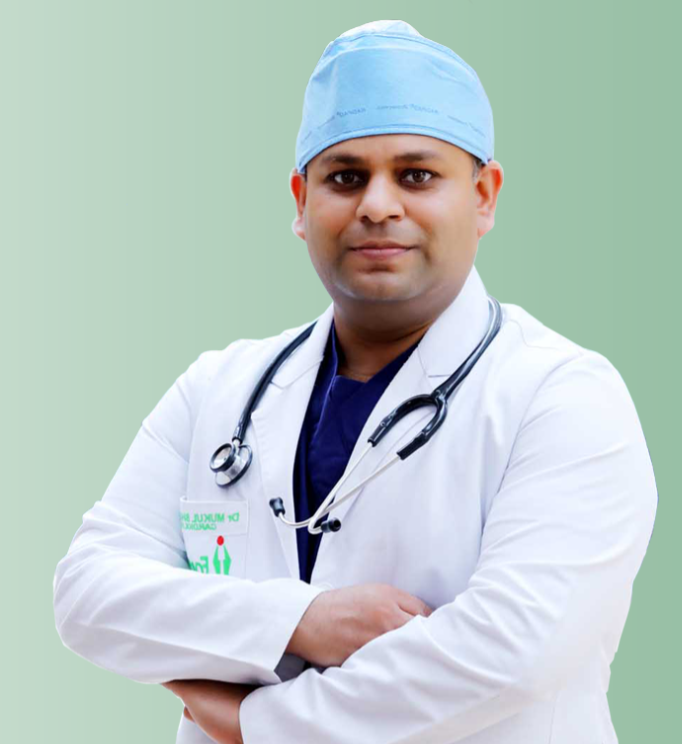
DM Cardiology (Gold Medallist)
Max Hospital, Gurugram
Extensive clinical experience in pacemaker interrogation, lead extraction, and physiological His-bundle pacing.
Sudden fainting, pulse under 40 bpm, or heart block? Contact our emergency desk.
+91-9560105356